This collection contains North Fond du Lac School yearbooks, currently starting with the year 1956, and covering most years up to the year 1985. (Yearbooks will leave at least a 10-year gap to present to allow school yearbook sales to not be affected by the digital collection.) Early yearbooks were called “The Oriole” and later yearbooks transitioned to the name “Horace Mann High School Yearbook.” Yearbooks display photos of students, faculty, and student sports activities and academic clubs.
Browse All Collections
Northeast Wisconsin Technical College

The archives of Northeast Wisconsin Technical College illustrate how vocational education began in the city schools of Green Bay and Marinette in 1912 and eventually expanded to include all Northeast Wisconsin and beyond. This collection was digitized and shared as NWTC prepared to celebrate 110 years of education.
Northernaire Resort Collection
The digital collections from the Three Lakes Historical Society document culture and social life in Northwoods Wisconsin in the 20th century. The Northernaire Resort Collection features photographs, postcards and newsletters related to the history of the Northernaire Resort, founded by Carl Marty, Jr. in 1947.
Novitiate Takeover

In 1975, a group known as the Menominee Warrior Society took over the Alexian Brothers’ former Novitiate near Gresham, Wisconsin in Shawano County, claiming treaty rights to the property. Various groups responded in different ways to this event, including local residents, the national media, the Menominee Nation of Wisconsin, and the Menominee Warrior Society dissident faction. This digital collection from the Shawano City-County Library consists of news clippings about the event and its aftermath, originally published in the Shawano Leader.
Oconto Falls Memory Project
Postcards and photographs depicting scenes from Oconto Falls, Wisconsin and the surrounding area, including images of Stiles Hydro Dam on the Oconto River, aerial views of Oconto Falls, and depictions of early 20th century local events by amateur photographer William Temple.
Odin J. Oyen Collection
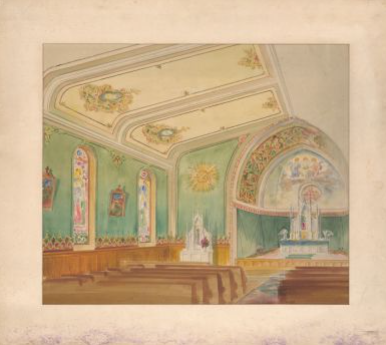
The Odin J. Oyen firm was once a thriving business in downtown La Crosse, Wisconsin, that created original watercolors as proposed interior designs. The firm, or variations of it, existed from the late-1800s up to the Great Depression, generating countless watercolor designs for the interiors of courthouses, churches, fraternal organizations, and private residences, in locations across the Upper Midwest and beyond. Several hundred original watercolors reside in Murphy Library Special Collections, owned by the Wisconsin Historical Society, and local attorney Nicholas J. Passe acquired over 100 Oyen interior renditions and was willing to allow the Murphy Library Digital Collections to digitize and include those items in the Digital Collections. These items currently make up the Odin J. Oyen Collection.
Opening the Doors: Wisconsin Mental Health Heritage
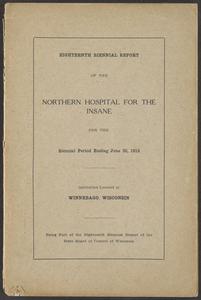
The Winnebago Mental Health Institute admitted its first patient on April 23, 1873 and was known as the Northern Hospital for the Insane. In 1935, the facility name was changed to the Winnebago State Hospital and was changed again in 1973 to the Winnebago Mental Health Institute. This collection includes annual reports authored by physician superintendents and issues of The Cue, a newsletter written and edited by patients at the hospital from 1968-1973.
Oral Histories of the Wisconsin HIV/AIDS History Project
The Wisconsin HIV/AIDS History Project brings to light significant stories from the state’s history of HIV/AIDS through the medium of oral histories. This collection includes video interviews with physicians, nurses, social service workers, AIDS Resource Center of Wisconsin (ARCW) staff, and long-time survivors. The interviews were conducted by Linda Wesp at the University of Wisconsin-Milwaukee in 2017-2018.
Oscar Grady Public Library

This photo collection captures the Saukville community throughout the 1900s and early 2000s. Images were collected by brothers Jim and John Peterson and donated to Oscar Grady Public Library for the purpose of digital preservation and public access.
Oshkosh Businesses
Photographs, newspaper articles, postcards, pamphlets and catalogs of businesses that once flourished in Oshkosh, including Deltox Rug Co., Oshkosh Trunk Co., and Stein’s clothing store.