
By Sophia Auron, UW-Madison iSchool, Summer 2026
This summer, I was part of the Recollection Wisconsin Digitization Initiative, working with the Wisconsin Library Association (WLA) to digitize their archives . I’m an MLIS student at the UW-Madison iSchool and I’m interested in archives and digital collections. My project was a true collaboration. Middleton Public Library provided space and the South Central Library System in Madison provided a scanner for my work.
The collection consists of documents such as conference pamphlets, newsletters, and photographs. These materials are mostly from around 1970 through the 2010s, with a few outliers. I learned a lot about the process of digitization from this experience. The materials themselves also taught me a lot about librarianship. Conference materials and newsletters are a great way to track trends in librarianship. I noticed lots of similarities to today, with the community advocating for accessibility, inclusion, intellectual freedom, and much more. I’ll share a few examples.
The Wisconsin library community has long been active in advocacy. As I was scanning newsletters, one moment immediately stood out to me. In the July 1977 issue, American Library Association chapter councilor Charles Bunge wrote about how the Council voted to refuse to hold future meetings in states that had not ratified the Equal Rights Amendment. He noted that the ALA brought in a lot of tourism that those states would lose. The WLA also harnesses its political power each year by participating in Library Legislative Day to advocate for libraries with legislators.
Intellectual Freedom is a WLA value that shines throughout these materials. In June 1986, the WLA censured Racine Unified School District for having a restrictive materials selection policy that violates intellectual freedom, supported by documentation from the Intellectual Freedom Committee. The same issue provides recommendations for celebrating Banned Books week. That’s just one of many examples in the materials I worked with.
Read the full WLA Newsletter, June 1986 (PDF)
Technology has long been a hot topic too. The 1981 conference theme was “How to Stay Human in a Technological Society”. A November 1984 talk was titled “Computers Today, Robotics Tomorrow, Will Libraries Need Librarians?” To me, that feels strikingly similar to the conversations about AI I’ve been part of in the classroom.
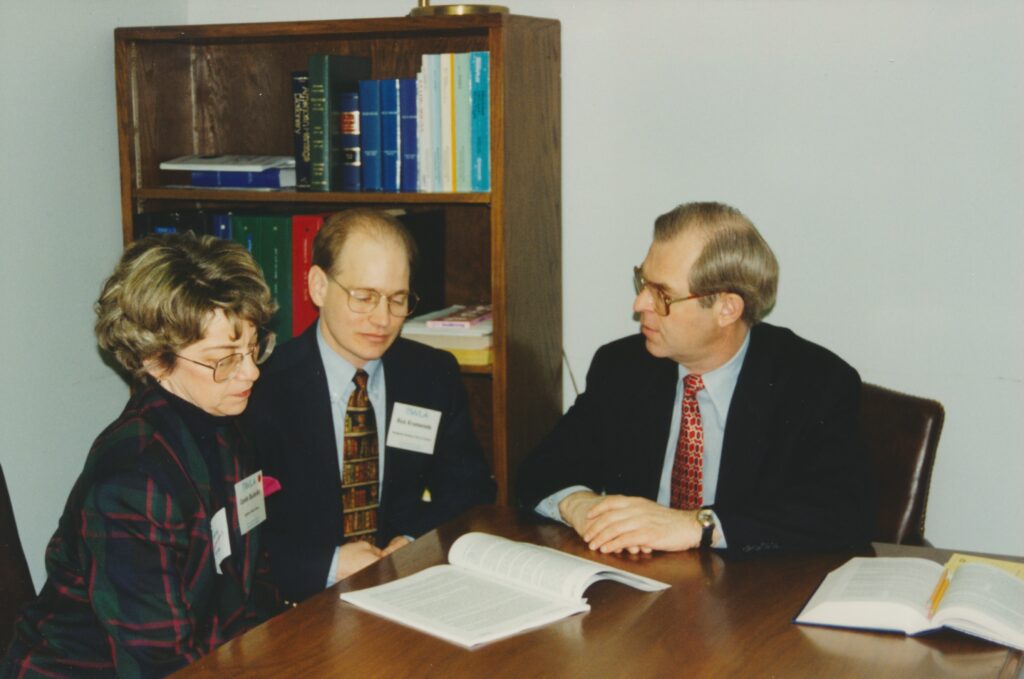
I feel so proud to be part of the Wisconsin library community. In a way, it’s comforting how we’ve been working through similar issues for a long time and are still coming up with new solutions to everything we encounter. This project was a wonderful way to make connections. I worked on a series of photographs from WLA events, most of which did not have individuals labeled. I crowd-sourced from the WLA community, and together we were able to name many of the people in the photos. Thank you to everyone who helped! I’m looking forward to continuing to be part of the Wisconsin library community.
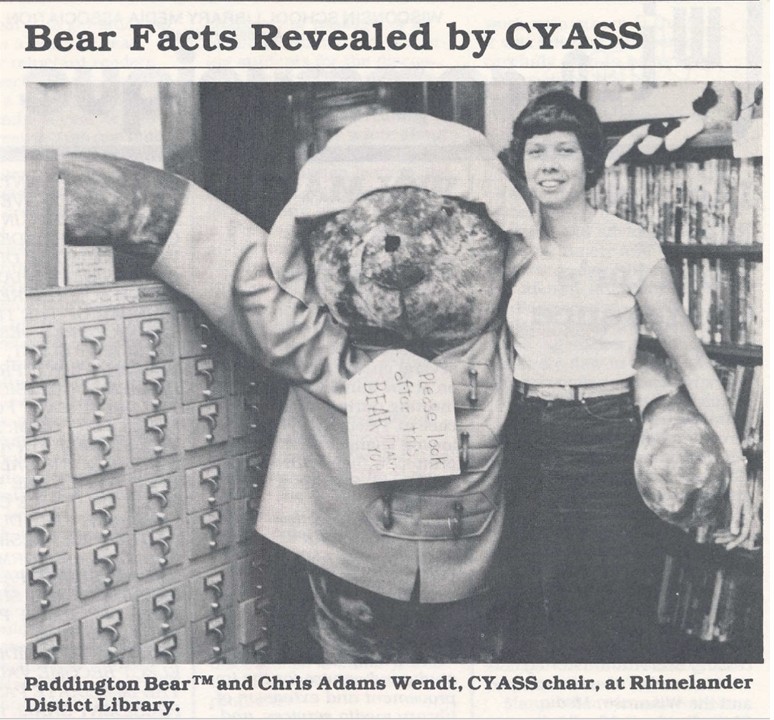
I also want to spotlight some fun events in WLA history. A favorite find of mine was a conference visit from Paddington Bear. You can also find materials related to events like costume parties, including a ‘50s and ‘60s sock hop hosted at the 1987 conference.
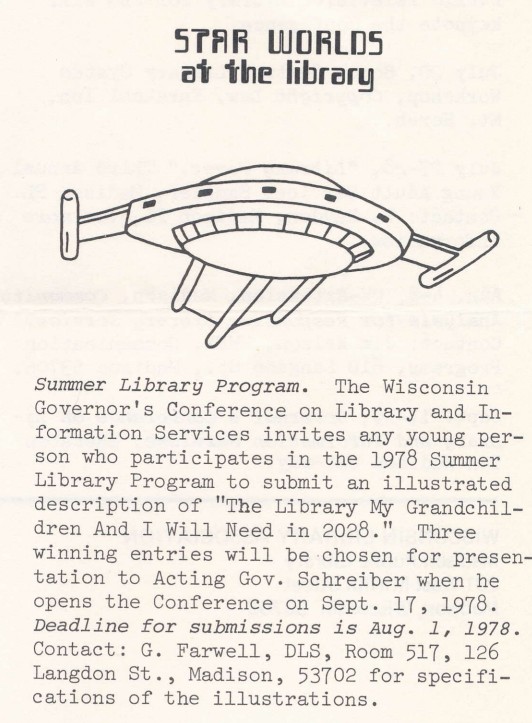
I’ll end by sharing the 1978 Summer Library Program’s call for kids to submit illustrated descriptions of “The Library My Grandchildren and I Will Need in 2028”. As we’re nearing 2028, I wish I could see those drawings. What will libraries look like in 2078?
You must be logged in to post a comment.