by Magnolia Sandell
In the Spring of 2026 I had the opportunity to intern at the Whitewater Public Library (WPL) through the Recollection Wisconsin Digitization Initiative, a wonderful way to round out my 1st year as a Library and Information Science graduate student at UW-Madison. Although I have a professional focus on academic libraries I’ve appreciated public libraries since my youth, and it’s been wonderful to gain a deeper understanding and greater appreciation for their work through hands-on experience.
During my undergraduate studies I interned at the Ellensburg Public Library (EPL) in Ellensburg, Washington, processing a local history collection that came to be known as the Donna Nylander Collection after a local children’s playwright whose items make up a majority of the holdings. This experience led me to applying for Recollection Wisconsin as one of their stated goals surrounding the preservation (through digitization) of underrepresented or otherwise unknown local histories piqued my interest. The following recounts highlights of this experience alongside wrestling with the ontology of local history as a student of information.
To begin, my main project at WPL was the digitization of a hundred or so local postcards collected by various librarians, seemingly since time immemorial. Some had been organized in a binder and arranged by location while others were simply in envelopes or loose in folders. Many of them portrayed scenes of the town and its infrastructure along with depictions of nature from the late 1880’s through the 1970’s. Having never been to Whitewater before it was fascinating to learn about the town initially through a historical lens, first seeing a building from the 1930’s on a postcard before driving by it while getting lunch that afternoon.
Whitewater has a fascinating history involving Spiritualism stemming from Morris Pratt and his eponymous Institute, initially opening in 1889 as the first school for the social religious movement which continues to operate in Wauwatosa to this day. Although far from the progenitor of Spiritualism, Pratt’s influence on the area remained long after his passing as stories of witches, ghosts, and the supernatural continue to abound in the otherwise sleepy city of 15,000.
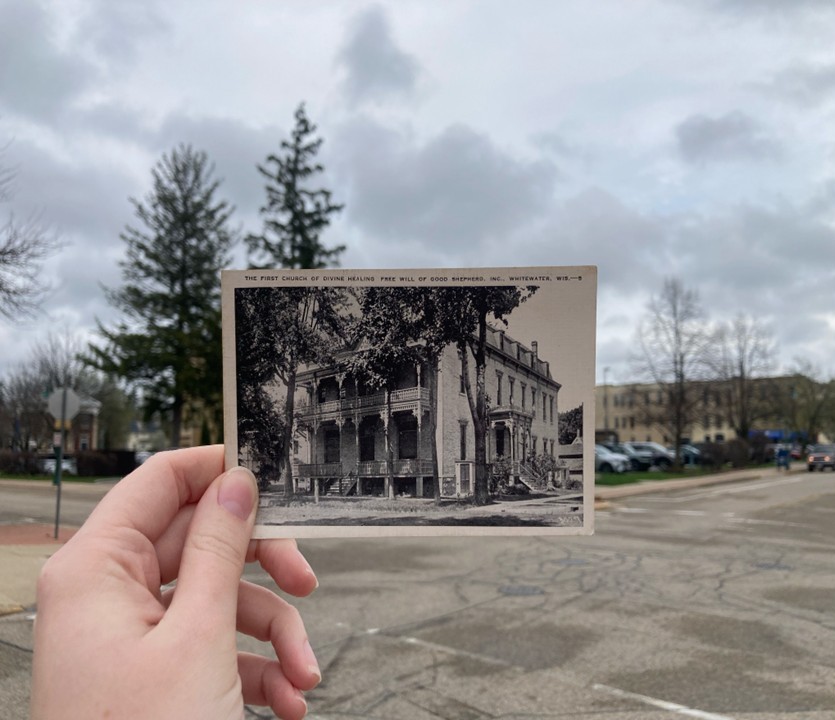
Re-photography by Magnolia Sandell.
The building that once held the Morris Pratt Institute was demolished in 1961, necessitating paranormal phenomena to migrate to other landmarks in the area.
The most imposing of these structures, depicted in only 1 postcard (an oddity amongst the collection) is the Starin Park Water Tower, an (in)famous local edifice that is said to attract witches due to its central location among the town’s cemeteries.
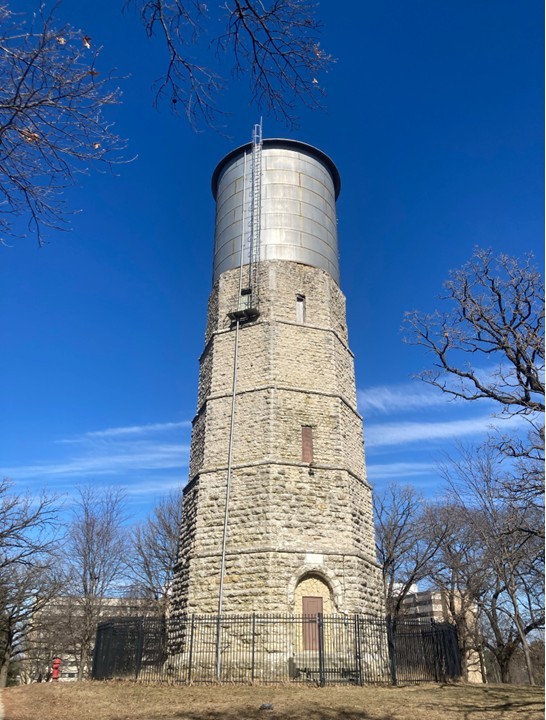
A perfectly normal water tower by any other measurements, it’s fascinating how buildings can take on new meaning by townsfolk as persistent local legends refuse to fade away, instead adapting to new circumstances. Although stories like this serve no economic purpose and (oftentimes) lack basis in historical fact, they act to tie a certain place together through common fables which intertwine the very fabric of a social tapestry.
Herein lies the strength of local history, a term that can lose its meaning when applied too generally. It is perhaps captured more precisely by verbiage used outside of the United States: notably the German word Heimatkunde which encompasses local geography, history, and natural history, and the Russian krayevedeniye, a more fluid field of spatial sciences. These systems too served their material realities, with 19th century German unification and Soviet central economic planning residing in their respective hearts.
In the moment, I thought completing my older Ellensburg project was fulfilling because in some small part it was my history, or at least the history of my home region. Upon completion of the WPL project, however, I realized that preserving local history anywhere is akin to preserving local history everywhere.
Humans are social creatures that require narratives to bind us together, no matter the place or time. These stories are greater than the sum of their parts, opposite of the dusty history books which tell of people who lived and died but otherwise have little to say concerning their actual lives. Seeing this universality of application in a new and wondrous light is perhaps my greatest takeaway from my time in Whitewater.
Consider these aspects next time you visit a local history museum or stop by a historical society. You may find yourself leaving with a newfound appreciation for the world we live in.
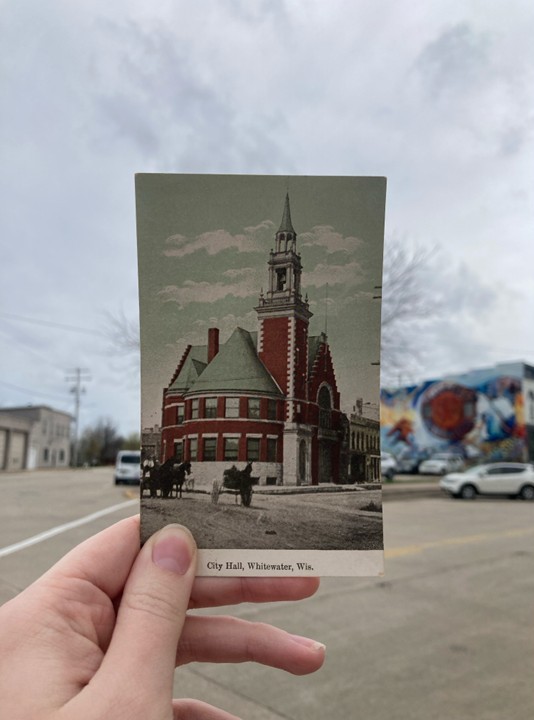
Re-photography by Magnolia Sandell.

You must be logged in to post a comment.